The Pitt County Arboretum
  • Home
  • What's In Bloom
  • About
    • Staff
    • Master Gardeners
    • Map
    • Stay in Touch
  • Visit
    • Visitor Information
    • Visitor Etiquette
    • Tours
    • Pitt County Agricultural Center
  • Our Gardens
    • Our Gardens
  • Blog
  • Director's Choice
  • Events
    • Calendar
    • Northside Plant Walks
  • Support
    • Plant Sale
    • Friends of the Arboretum >
      • Membership
      • Giving
    • Volunteer
  • Resources
    • Guides
    • Videos
    • Photo Gallery
  • Contact

Welcome to the Blog!

Look for signs of spring in your garden

1/22/2024

0 Comments

 
Story by Joanne K., Pitt County Extension Master Gardener Volunteer

Although the recent cold snap says winter, signs of spring are everywhere in eastern North Carolina as evidenced by the swelling buds of many trees and woody shrubs.

But you might wonder, what is a bud and how does it know to start growing?

A bud is an undeveloped shoot from which new leaves or flower parts arise.

In summer while the trees and shrubs are covered with leaves, next year's flower and leaf buds are already forming in the axil of the leaves (the small angle between the plant's stem and the leaf attachment).  

Bud formation happens because the plant has received enough sunshine to store energy in the form of sugar and proteins for next year's growth. The buds will grow to a certain size in summer and fall, and then rest for the winter.

These winter or resting buds contain the shapes of next year's leaves and flowers.

While breaking dormancy is a complex process, it results when more day light and higher temperatures encourage buds to start enlarging.

Our mild eastern North Carolina winters, combined with longer December days, encourage some tree and shrub buds to start growing in December and January.


They do this by using their stored energy.
Picture
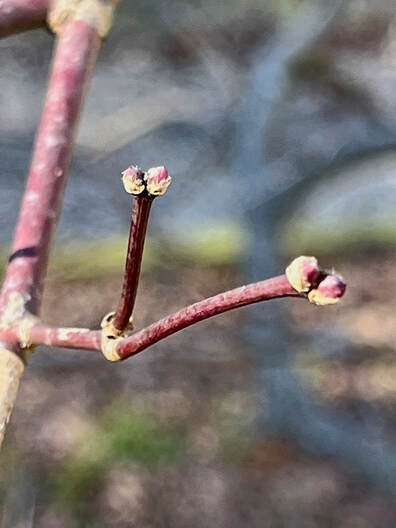
Japanese Maple, Acer palmatum
Picture
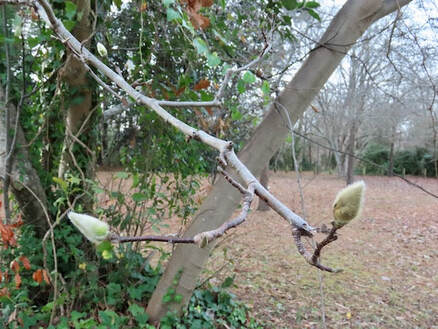
Saucer Magnolia, Magnolia x soulangeana
Two trees with very prominent buds are the Saucer Magnolia, Magnolia x soulangeana, and the Star Magnolia, Magnolia stellata. Dense silvery hairs cover the bulbous-shaped buds, giving them a soft glow in the sunlight.They do this by using their stored energy.

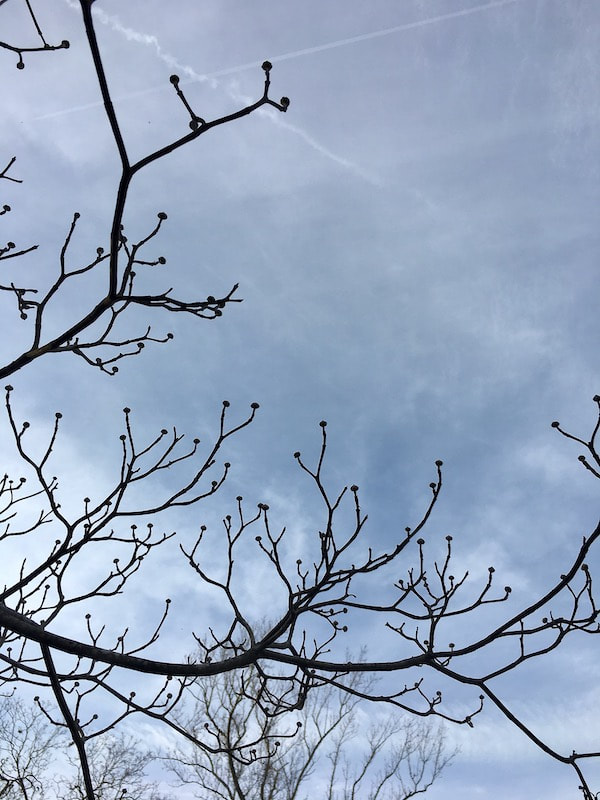
The Flowering Dogwood, Cornus florida, has buds that look like tiny black knobs on the end of the stems.

The buds of the Japanese Maple, Acer palmatum, are tiny, deep purple/black in color, and are often doubled and clearly visible on the branches.

Picture
Flowering Dogwood, Cornus florida
Picture
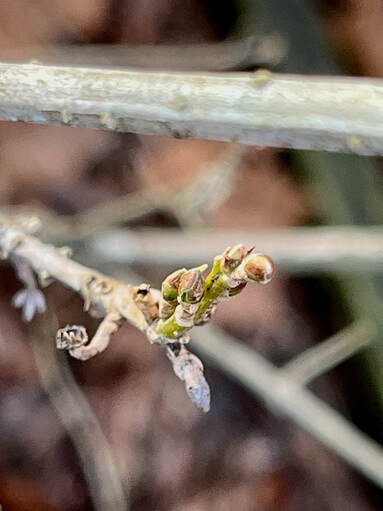
Forsythia, Forsythia x intermedia
On Forsythia, Forsythia x intermedia, the brown or green buds are pointed, with the flower buds opening first. As the flowers fade, the leaves start to appear.

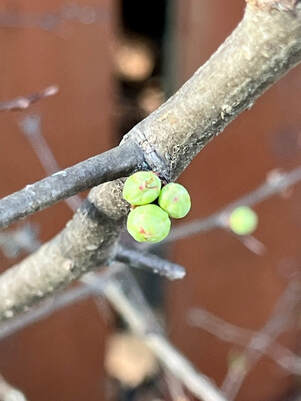
White Flowering Quince buds, Chaenomeles speciosa, are round green balls, with the flowers blooming ahead of the leaves.

Each tree and shrub species has its own distinctive buds. These vary in shape, size, texture, placement, and color. These distinctions are identifying marks in winter.
Picture
White Flowering Quince buds, Chaenomeles speciosa
Take a stroll around your yard and neighborhood to look closely at the trees and shrubs. Spend a few minutes along the Walking Trail in the Arboretum. You'll marvel at the early signs of life you'll see in the buds.

All pictures by Joanne K.

0 Comments


Leave a Reply.

Proudly powered by Weebly
  • Home
  • What's In Bloom
  • About
    • Staff
    • Master Gardeners
    • Map
    • Stay in Touch
  • Visit
    • Visitor Information
    • Visitor Etiquette
    • Tours
    • Pitt County Agricultural Center
  • Our Gardens
    • Our Gardens
  • Blog
  • Director's Choice
  • Events
    • Calendar
    • Northside Plant Walks
  • Support
    • Plant Sale
    • Friends of the Arboretum >
      • Membership
      • Giving
    • Volunteer
  • Resources
    • Guides
    • Videos
    • Photo Gallery
  • Contact